Moving Industry Statistics: Who Moves, Where & Why (2026)


(Updated November 10, 2026)
Here’s the quick answer: Nearly 40 million Americans, or 11.8% of the population, moved in 2024, according to the U.S. Census Bureau. Those moves support a U.S. moving services industry worth $25.7 billion in 2026, per IBISWorld. These moving industry statistics show who moves, when, where, why, and what it costs, so you can plan your own move and compare the best moving companies with real numbers in hand.
Key moving industry statistics for 2026:
- Annual movers: Nearly 40 million Americans moved in 2024, and about 7 million of them moved to a different state.
- Industry size: The U.S. moving services industry is worth $25.7 billion in 2026 and includes about 9,430 businesses.
- Peak season: 41% of annual U.S. moves happen between May and August, and June is the most common month to move.
- Top move-to state: SC leads 2026 with 2.02 searches for moves in for every 1 out, based on moveBuddha data.
- Top reason to move: 88% of Americans say saving money would influence a move in 2026, per moveBuddha’s 2026 moving survey.
Jump to the moving statistics you’re looking for:
How many Americans move each year?
Nearly 40 million Americans moved in 2024, or 11.8% of the population, according to the Census Bureau’s American Community Survey. That rate is down from 12.1% in 2023.
Americans move far less often than they used to. In 1948, the first year the Census Bureau tracked moves, 20.2% of Americans moved. By 2021, the rate had dropped to 8.4%, less than half that level.
Most moves stay close to home. About half of 2023 movers stayed in the same county, and about 3 in 4 stayed in the same state:

Here’s how often and how far Americans move:
- Lifetime moves: The average American moves about 11.7 times in their lifetime, based on the Census Bureau’s migration expectancy estimate.
- Interstate moves: 2.1% of Americans moved to a different state in 2024, or roughly 7 million people.
- In-state moves: 8.9% of Americans moved to a new home in the same state in 2024.
How much does moving cost?
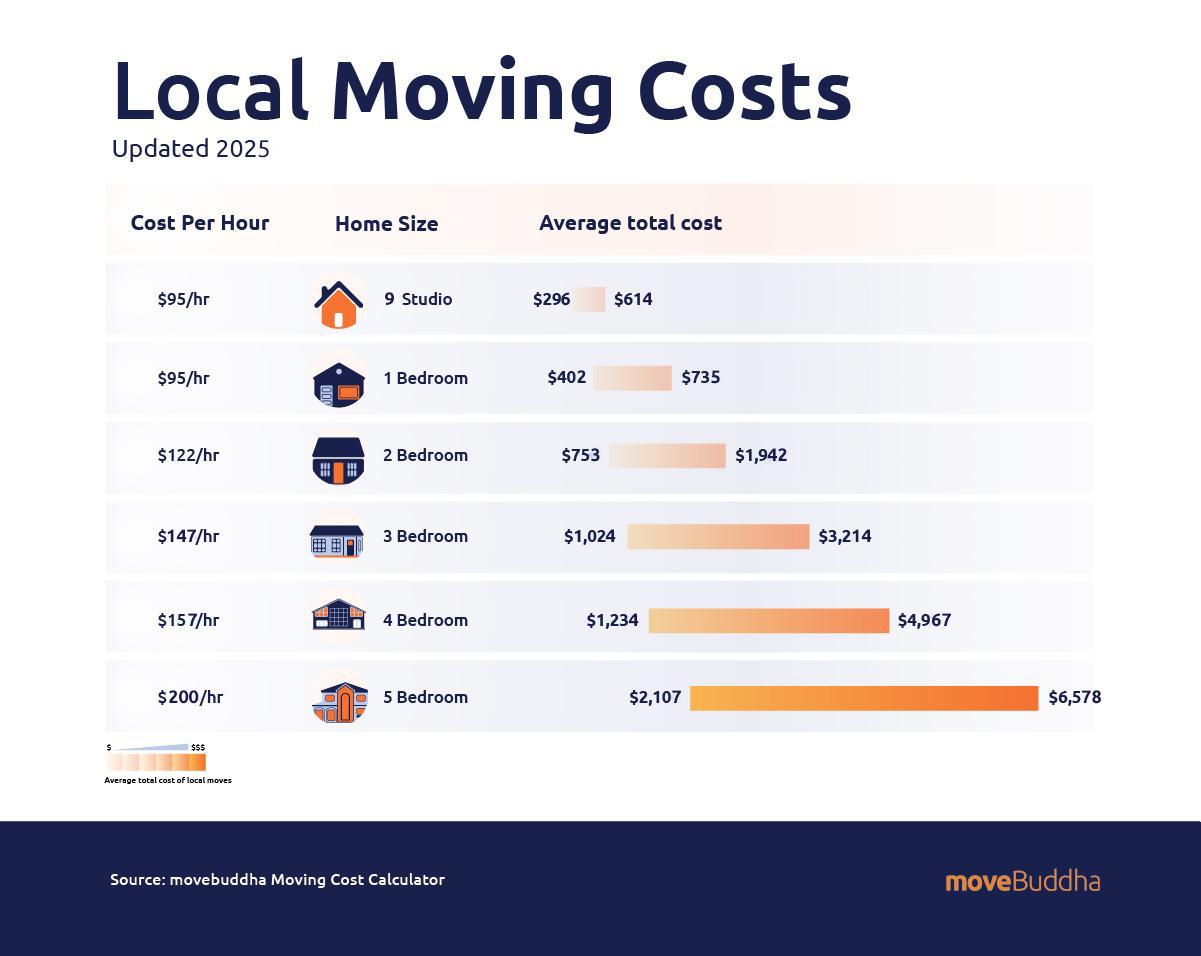
A local move with professional movers costs $296 – $6,578, depending on home size, according to moveBuddha Moving Cost Calculator data. Local movers charge by the hour, at about $95 – $200 per hour.
Here’s what local moves cost by home size:
Long-distance movers charge by weight and distance instead. A typical interstate move of 2,000 – 2,500 miles costs $4,000 – $5,000, according to moveBuddha pricing data, while a 4 – 5 BR home moving 1,000+ miles can top $15,000.
Here’s what long-distance moves cost by distance and home size:

National averages only go so far. moveBuddha’s moving cost calculator weighs your distance, home size, move date, and services together, so your range reflects your move instead of a flat industry average.
Why plan your move with moveBuddha:
- On average, moveBuddha users save more than 30% by comparing movers before booking.
- When you choose a moveBuddha Certified mover, you get $1,000 in added move coverage, plus dedicated support throughout your move.
- If something goes wrong, moveBuddha provides dispute mediation with Certified movers to help resolve the issue and protect your move.
How & when do people move?
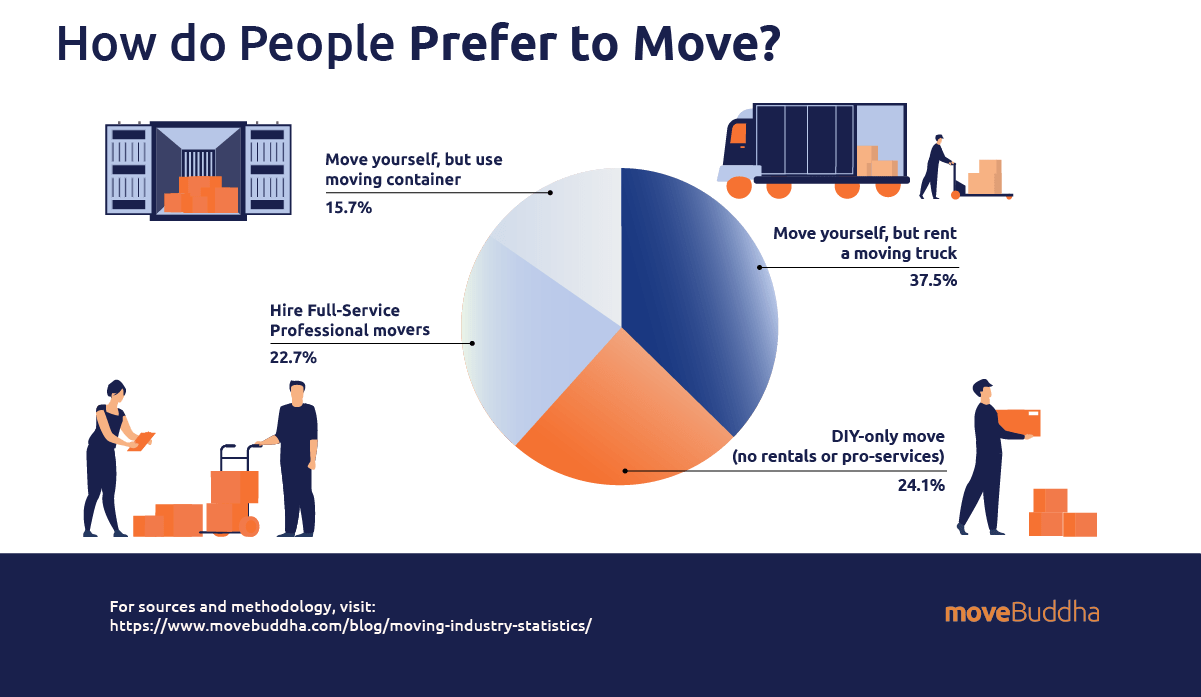
Most Americans move themselves. A moveBuddha survey of 1,500 U.S. adults found only 22.7% would hire full-service movers:
- Truck rental: 37.5% would move themselves with a rental truck.
- Full DIY: 24.1% would move with no rentals or professional help.
- Full-service movers: 22.7% would hire a full-service moving company.
- Moving container: 15.7% would pack a moving container themselves.
When is the busiest time to move?
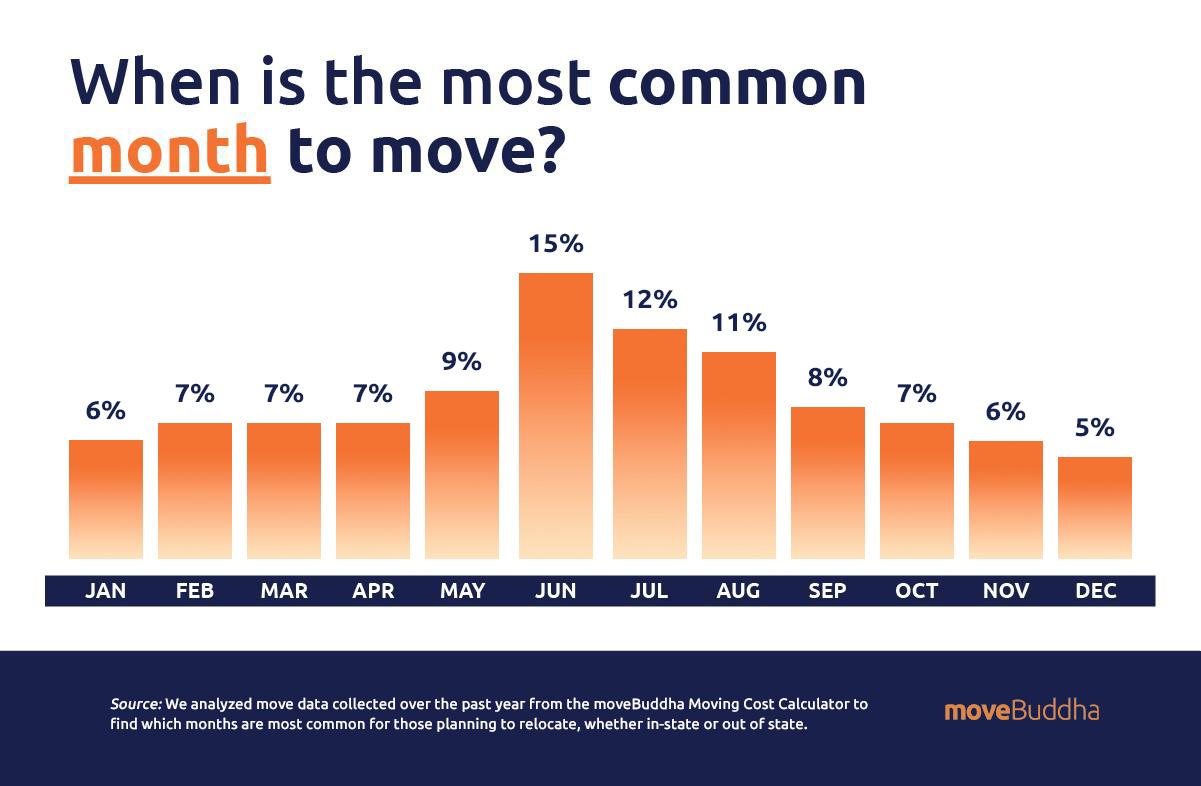
Summer is the busiest time to move. 41% of annual U.S. moves happen between May and August, and June is the most common month to move, according to moveBuddha calculator data.
June 1 and June 30 are the busiest moving dates of the year, with Sept. 1 and Sept. 30 close behind. June also leads move planning, with nearly 15% of all move planning activity:
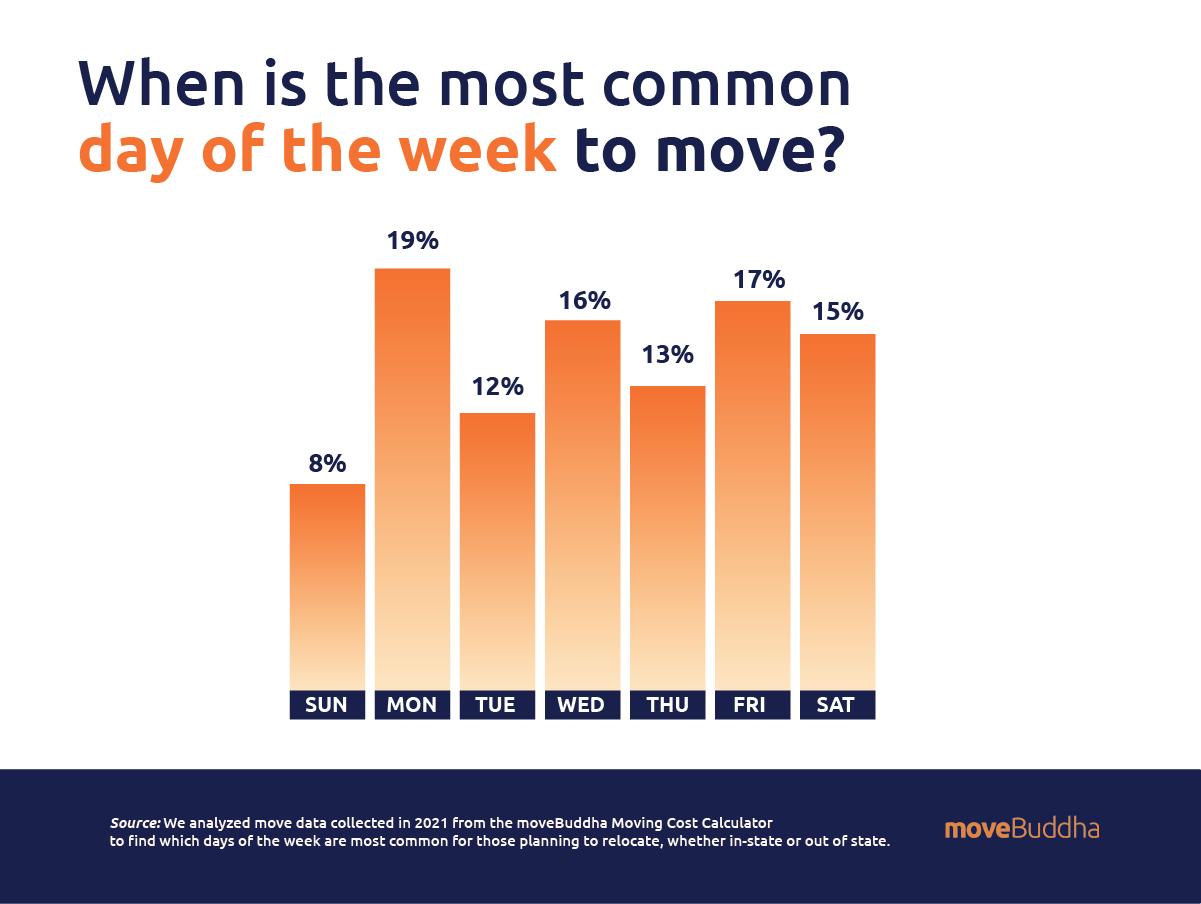
Monday is the most common day to move, with 19% of moves, followed by Friday at 17%. Sunday is the least popular day, with just 8% of moves:
How far ahead do people plan a move?
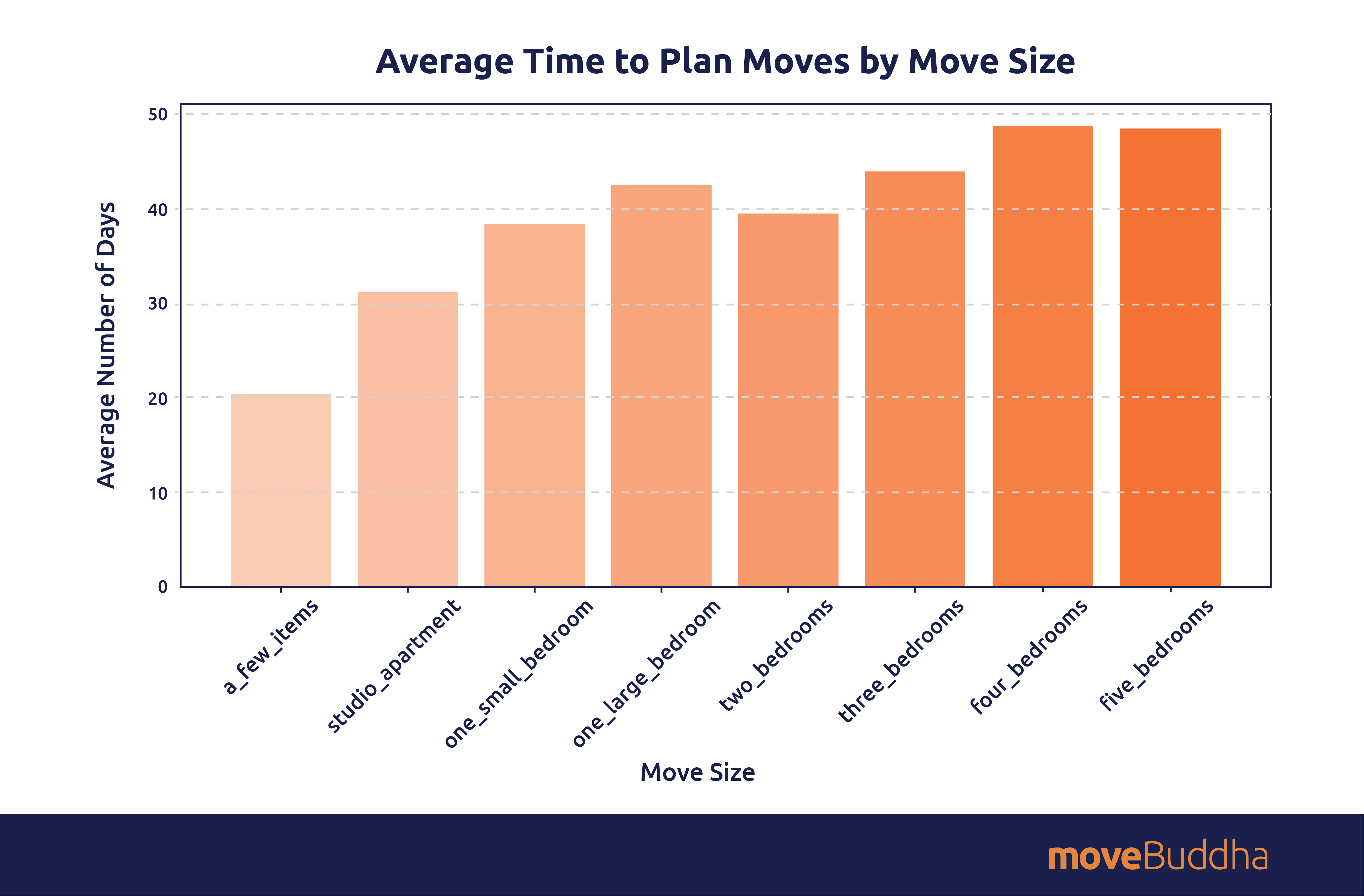
Movers plan an average of 29 days ahead, since many moves line up with the end of a lease. Half of people moving just a few items plan their move in 13 days or less.
Bigger moves get more lead time. Average planning time runs from about 20 days for a few items to roughly 49 days for a 4 – 5 BR home:
Pro tip: Book a midmonth, midweek date between October and April to dodge peak demand and get more open dates. See our guide to the best time to move.

41% of annual U.S. moves happen between May and August, and June is the most common month to move.
Where are Americans moving?
South Carolina, Idaho, and Florida are 2026’s top move-to states, based on moveBuddha’s 2026 moving trends data. The in-to-out ratio compares moveBuddha searches for moves into a state vs. out of it.
Which states are people moving to?
South Carolina ranks #1 again, with 202 searches for moves in for every 100 out. Here are the 10 most popular states to move to in 2026:
| Rank | State | In-to-out ratio |
|---|---|---|
| 1 | SC | 2.02 |
| 2 | ID | 1.65 |
| 3 | FL | 1.52 |
| 4 | SD | 1.50 |
| 5 | NC | 1.49 |
| 6 | AR | 1.46 |
| 7 | MT | 1.43 |
| 8 | TN | 1.38 |
| 9 | AL | 1.38 |
| 10 | ME | 1.33 |
Florida is gaining the most ground. Its ratio jumped from 1.17 in 2025 to 1.52 in 2026, and New Mexico, Arizona, and Montana also rank among the biggest gainers.
Which states are people leaving?
Connecticut is 2026’s least popular state to move to, with just 0.57 searches in for every 1 out. Northeastern states dominate the bottom 10:
| Rank | State | In-to-out ratio |
|---|---|---|
| 50 | CT | 0.57 |
| 49 | NJ | 0.64 |
| 48 | MD | 0.65 |
| 47 | DC | 0.67 |
| 46 | VA | 0.69 |
| 45 | CA | 0.71 |
| 44 | NH | 0.72 |
| 44 | RI | 0.72 |
| 42 | MA | 0.73 |
| 41 | NY | 0.75 |
Which states gained the most residents?
Texas gained the most residents of any state in 2025, adding 391,243 people, according to Census Bureau population estimates. Florida (196,980) and North Carolina (145,907) came next.
North Carolina led the country in net domestic migration, drawing 84,064 more residents from other states than it lost. Texas (67,299), South Carolina (66,622), and Tennessee (42,389) followed, and South Carolina was the fastest-growing state at 1.5%.
Which cities are people moving to?
The Villages, Florida, is 2026’s top move-to city, with 3.58 searches in for every 1 out in moveBuddha data. Six of the top 10 move-to cities are in Florida. Here are the top five:
| Rank | City | In-to-out ratio |
|---|---|---|
| 1 | The Villages, FL | 3.58 |
| 2 | Las Cruces, NM | 3.44 |
| 3 | Ocala, FL | 2.74 |
| 4 | Punta Gorda, FL | 2.66 |
| 5 | St. Augustine, FL | 2.65 |
Moving out of state? Compare the best interstate moving companies before you book.
Who is moving?
Renters move far more often than homeowners. Renters made up 61% of people who moved within the U.S. in 2024, even though homeowners make up about 65% of Americans, based on 2024 Census data analyzed by Point2Homes.
Renters also lead long-distance moves. They made up 58.6% of interstate movers and 61.5% of movers who stayed in the same state.
Why do people move?
Affordability drives most moves in 2026. In moveBuddha’s 2026 moving survey of 1,250 Americans, 88% said saving money would influence their decision to move.
Here’s what else shapes Americans’ moving decisions:
- Low cost of living: 16% would prioritize a move to wherever the cost of living is low, up from 8.5% in 2025.
- Suburbs: 24% pick the suburbs as their preferred place to live, down 5% from 2025, and rural areas rank second at 21%.
- Cost barriers: 40% say high moving costs keep them from moving, and 38% point to housing costs in the places they’d like to live.
- Family & jobs: In United Van Lines’ 2025 National Movers Study, 29% of movers relocated to be closer to family and 26% moved for a new job or transfer.
How big is the moving industry?
The U.S. moving services industry is worth $25.7 billion in 2026, according to IBISWorld. The industry grew 2.1% a year on average from 2021 to 2026.
With more than 9,000 moving companies to choose from, quotes for the same move can vary widely. moveBuddha’s calculator runs on 1,000+ live price points collected every month, so you have a real benchmark to measure each quote against.
Here are the key numbers behind the industry:
- Businesses: About 9,430 moving companies operate in the U.S. in 2026.
- Employees: The moving services industry employs about 108,889 people in 2026.
- Economic impact: Moving & storage generated $32.2 billion in direct economic activity and $92.2 billion in total activity in 2021, according to the American Trucking Associations.
- Self-storage: The U.S. has 57,981 self-storage facilities, and 11.1% of households rent a storage unit.

The U.S. moving services industry is worth $25.7 billion in 2026, with about 9,430 moving companies competing for jobs.
How much waste does moving create?
American moves produce 900 million cardboard boxes and 8.4 million tons of junk each year, according to moveBuddha’s moving waste research. Here’s the full yearly tally:
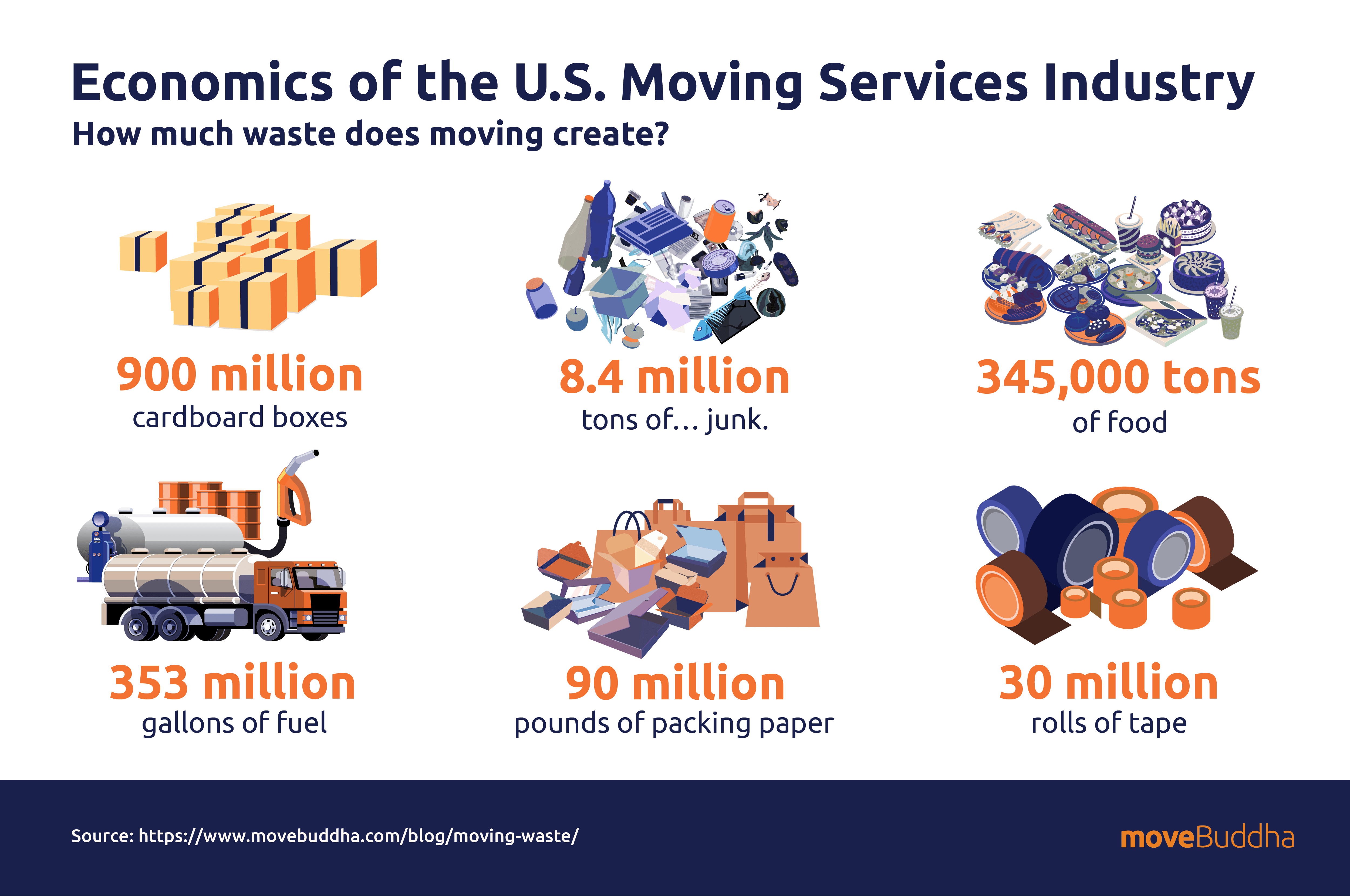
- Boxes & packing supplies: Moves use 900 million cardboard boxes, 90 million pounds of packing paper, and 30 million rolls of tape.
- Junk & food: Movers throw out 8.4 million tons of junk and 345,000 tons of food.
- Fuel: Local and long-distance moves burn 353 million gallons of fuel.
How did the pandemic affect the moving industry?
The COVID-19 pandemic pushed moving demand past what companies could handle. In moveBuddha’s 2021 moving company survey, 71% of moving companies reported delays beyond what’s normal for peak season:
- Driver shortages: 67% of moving companies didn’t have enough drivers to cover demand.
- Longer waits: Nearly half of moving companies were booked out at least three weeks further than in previous seasons.
- Cancellations: Customer complaints about cancellations rose 250% in 2021 compared with 2019.
- Remote work: Almost 40% of moves from March 2020 to August 2021 were influenced by COVID-19 or remote work policies.
What moving trends should you expect next?
Americans are moving less, but the people who do move are chasing lower costs. Here are the trends shaping moves in 2026:
- Affordability comes first. Twice as many Americans as last year would move wherever the cost of living is low, and 72.9% say a move would take a 20%+ cut in housing costs to be worth it.
- The South keeps winning. SC is on track for a fourth straight year as the top move-to state, and FL draws 30% of all net inbound moving searches in moveBuddha data.
- The Mountain West is gaining. NM, AZ, and MT are drawing more move-in interest than in 2025.
- Work is driving more moves. Interest in moving for remote work rose 11% and interest in moving for career opportunities rose 10% from 2025, per moveBuddha’s 2026 survey.
Ready to make a move? The moveBuddha Mover Marketplace gets you up to five no-obligation quotes from one request, matched to movers’ real-time availability. Compare two of moveBuddha’s top-rated movers:


 rating
 4.9 / 5


- Best overall value
- Veteran owned
- Portion to charity
 rating
4.9 / 5
- Certified crews
- Flat-rate pricing
- Family-owned

FAQs
How many people move each year in the US?
Nearly 40 million people move each year in the U.S., or 11.8% of the population, based on 2024 Census data. About 7 million of them move to a different state. If you’re moving in summer, book movers at least eight weeks ahead.
What month do most people move?
Most people move in June, and 41% of annual U.S. moves happen between May and August, according to moveBuddha data. June 1 and June 30 are the busiest moving dates of the year. Pick a midmonth or off-season date for lower rates and more open dates.
How big is the moving industry?
The U.S. moving industry is worth $25.7 billion in 2026, according to IBISWorld. It includes about 9,430 businesses that employ roughly 108,889 people. With that many companies, get at least three quotes before you book.
What state are most people moving to?
The most popular state to move to in 2026 is South Carolina, with 2.02 searches for moves in for every 1 out in moveBuddha data. Idaho (1.65) and Florida (1.52) rank second and third. Compare home prices and moving costs together before you pick a state.
Why do most people move?
Most people move to save money, be closer to family, or take a new job. In moveBuddha’s 2026 survey, 88% of Americans said saving money would influence a move. Price your move with a moving cost calculator before you commit.
Methodology & sources
We combined U.S. Census Bureau data, industry research, and moveBuddha’s own data to build these moving industry statistics. moveBuddha data comes from searches on the moveBuddha Moving Cost Calculator, part of the tools and guides more than 400,000 people use each year, plus moveBuddha’s consumer and moving company surveys.
Our thorough moving methodology explains how we vet and rank moving companies.
Sources:
- U.S. Census Bureau, “American Community Survey 1-Year Estimates: Migration and Geographic Mobility“
- U.S. Census Bureau, “Calculating Migration Expectancy Using ACS Data“
- U.S. Census Bureau, “U.S. Migration Continued Decline From 2020 to 2021“
- U.S. Census Bureau, “Population and Housing Unit Estimates“
- Point2Homes, “U.S. Mobility Rates Reach Historical Low“
- IBISWorld, “Moving Services in the US“
- American Trucking Associations, “New Report Outlines Economic Impact of Moving and Storage Industry“
- Self-Storage Almanac, “2025 Industry Data“
- United Van Lines, “2025 National Movers Study“
- moveBuddha, “2026 Moving Trends: Where Americans Are Moving“
- moveBuddha, “2026 Moving Survey“
- moveBuddha, “How Much Waste Does Moving Create?“
- moveBuddha, “Moving Company Pandemic Survey“
- moveBuddha, Moving Cost Calculator
Not what you were looking for?
Check out other categories that can help you find the information you need!