How to Choose the Right Moving Truck Size
Here’s the quick answer: Moving truck sizes run from 10 to 26 feet, with cargo vans and pickups for smaller loads. A 10-foot truck (402 cubic feet) fits a studio, while a 26-foot truck (1,682 cubic feet) fits a three- to four-bedroom home. Below, you’ll find a size chart, what fits in each truck, and how the best rental truck companies compare.
Jump to the moving truck size info you’re looking for:

 rating

 4.3 / 5


- Affordable pricing
- Online pricing
- Several discounts
 rating
 4 / 5
- Most expensive
- 4 truck sizes
- Unlimited mileage
 rating
4.15 / 5
- Greatest coverage
- 7 truck sizes
- One way rentals

Moving truck size chart: Dimensions & capacity
Most rental companies offer the same core lineup, from pickups to 26-foot box trucks. Here’s how each size compares on interior space, cubic feet, and max load:
| Truck | Interior (L x W x H) | Cubic ft. | Max load | Best for |
|---|---|---|---|---|
| Pickup | 8′ x 5’1″ x 1’10” | ~76 | 2,280 lbs | Single items & dorms |
| Cargo van | 9’6″ x 5’7″ x 4’8″ | 246 | 4,030 lbs | Studio or 1-bed apt |
| 10 ft. | 9’11” x 6’3″ x 6’1″ | 402 | 2,850 lbs | Studio or 1-bed apt |
| 12 ft.* | 12′ x 6’6″ x 6’1″ | 450 | 3,100 lbs | Dorm or studio |
| 15 ft. | 15′ x 7’8″ x 7’2″ | 764 | 6,385 lbs | 1-bed home or 2-bed apt |
| 16 ft.* | 16′ x 7’7″ x 6’6″ | 800 | 4,300 lbs | 1-bed apt or small home |
| 17 ft. | 16’9″ x 7’8″ x 7’2″ | 865 | 6,160 lbs | 2-bed home |
| 20 ft. | 19’5″ x 7’8″ x 7’1″ | 1,016 | 5,700 lbs | 2-bed home or 3-bed apt |
| 26 ft. | 26’2″ x 8’1″ x 8’3″ | 1,682 | 12,859 lbs | 3 – 4 bed home |
*Penske specs. All other rows use U-Haul specs. Dimensions and capacity vary slightly by model year and provider.
Pro tip: Check the rental site’s truck photos and load diagrams before you book, then plan your loading order with our guide to packing a moving truck.
How do you choose the right moving truck size?
Start with your home size, then adjust for bulky furniture, distance, and how comfortable you are driving a big truck:
- Count your rooms. Rental companies size trucks by room count. U-Haul suggests a 10-foot truck for a studio and a 26-foot truck for a three- to four-bedroom home.
- Measure your bulky items. One oversized sectional or king bed can push you up a size. Budget notes a king-size bed won’t fit in its 12-foot truck.
- Run the numbers. moveBuddha’s moving truck size calculator asks your home size, how much stuff you own, and whether you have a garage, attic, or storage unit, then recommends a specific truck size.
- Factor in distance. Two trips in a smaller truck can work for a short local move. For a long-distance move, rent a truck big enough to make one trip.
- Be honest about driving. Bigger trucks are harder to park and turn on tight city streets. If you’re between sizes and nervous behind the wheel, a smaller truck plus a second trip may be the safer call.
What fits in each moving truck size?
Use this quick reference to picture a typical load for each truck size:
- Pickup truck: A pickup fits a twin mattress, a small dresser, and a few boxes. It works best for single items or a dorm room.
- Cargo van: A cargo van fits a queen bed, a nightstand, and the boxes from a small studio.
- 10-foot truck: A 10-foot truck fits a queen bed, a loveseat, and a small dining set.
- 15- or 16-foot truck: These trucks fit two beds, a sofa, and a washer and dryer.
- 17-foot truck: A 17-foot truck fits two to three beds plus living and dining room furniture.
- 20-foot truck: A 20-foot truck fits three bedrooms of furniture and major appliances.
- 26-foot truck: A 26-foot truck fits a three- to four-bedroom home, including outdoor gear and patio furniture.
Need to know how many boxes you’ll pack? Try our free packing and moving box calculator for a tailored estimate.
What size moving truck do you need?
Rental trucks fall into five groups: pickups, cargo vans, and small, medium, and large box trucks. Here’s who each one suits.
Pickup trucks

A pickup truck is ideal for dorm-to-dorm moves or hauling a few large items. Pickups are easier to drive and cheaper than a box truck, but they don’t have a low deck or loading ramp.
- Typical size: A U-Haul pickup bed holds about 76 cubic feet.
- Weight limit: Max load is 2,280 pounds.
- Ideal for: Single items, dorm moves, and short local hauls.
- Starting price: U-Haul pickups start at $19.95 plus mileage for in-town rentals.
Cargo vans

A cargo van gives you 246 cubic feet of enclosed, weatherproof space for small local moves. It’s easier to maneuver than a 10-foot truck and gets about 18 mpg, according to U-Haul.
- Typical size: A U-Haul cargo van holds 246 cubic feet.
- Weight limit: Max load is 4,030 pounds.
- Ideal for: Studios and one-bedroom moves without large furniture.
- Starting price: U-Haul cargo vans start at $19.95 plus mileage for in-town rentals.
Small moving trucks (10 – 12 feet)
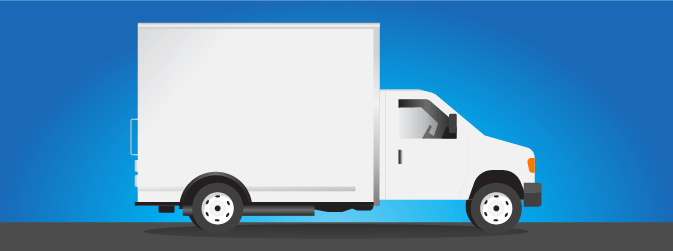
Small moving trucks hold 380 – 450 cubic feet, enough for a larger studio or one-bedroom apartment. They protect your belongings better than a pickup, and U-Haul, Penske, and Budget all rent them for one-way, long-distance moves.
- Typical size: Small trucks range from 380 cubic feet (Budget 12-foot) to 450 cubic feet (Penske 12-foot).
- Weight limit: Max load runs 2,850 – 3,610 pounds, depending on the provider.
- Ideal for: Studio and one-bedroom moves, local or long-distance.
- Starting price: U-Haul’s 10-foot truck starts at $19.95 plus mileage for in-town rentals.
rating
4.15 / 5
Medium moving trucks (15 – 17 feet)
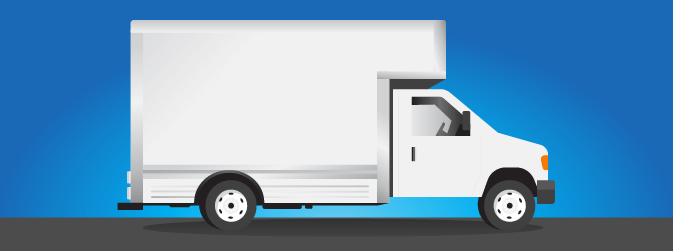
A medium truck fits a larger apartment or a one- to two-bedroom home, and it works for local or long-distance moves. Medium trucks are still manageable to drive, and our guide to driving a moving truck covers what to expect. See the cost to move a two-bedroom home for full budget numbers.
- Typical size: Medium trucks hold 764 – 865 cubic feet.
- Weight limit: Max load runs 4,300 – 6,385 pounds, depending on the provider.
- Ideal for: One- to two-bedroom homes moving locally or long-distance.
- Starting price: U-Haul’s 15-foot truck starts at $29.95 plus mileage for in-town rentals.
rating
4 / 5
Large moving trucks (20 – 26 feet)
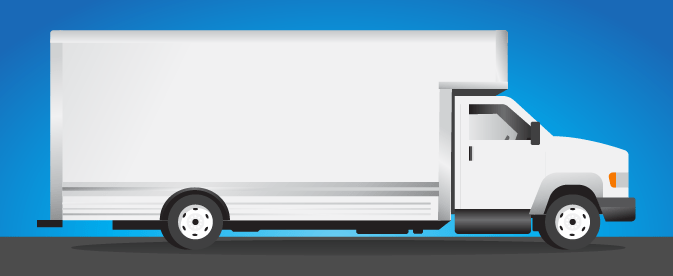
A 26-foot truck is the largest size most rental companies carry, and it’s built for a three-bedroom move or bigger. If you have a lot of belongings and want to make one trip, a large truck is your best bet.
- Typical size: Large trucks hold 1,016 – 1,682 cubic feet.
- Weight limit: Max load runs 5,700 – 12,859 pounds, depending on the model.
- Ideal for: Three- to four-bedroom homes moving locally or long-distance.
- Starting price: U-Haul’s 20- and 26-foot trucks start at $39.95 plus mileage for in-town rentals.
rating
4.3 / 5
What sizes do U-Haul, Penske, Budget & Enterprise offer?
U-Haul, Penske, and Budget Truck Rental all rent trucks for one-way moves. Enterprise trucks must go back to the original pickup location, which limits them to local moves. Here’s how the four compare:
| Company | Truck sizes | Min. age | One-way rentals |
|---|---|---|---|
| U-Haul | 10 – 26 ft. | 18 | Yes |
| Penske | 12 – 26 ft. | 18 | Yes & unlimited miles |
| Budget | 12 – 26 ft. | 24* | Yes |
| Enterprise | 15 – 26 ft. | 21 – 25 | No |
*Some Budget locations rent to drivers 18 – 23 for a daily surcharge. Age rules vary by location.
If you’re under 21 and moving out of state, U-Haul and Penske are your easiest options. Penske’s unlimited miles on one-way moves make it a strong pick for long hauls.
Why does choosing the right truck size matter?
The right size keeps your costs down and your belongings safe. Here’s why it’s worth getting right:
- Lower cost: U-Haul’s 10-foot truck starts at $19.95 for in-town rentals, compared to $39.95 for a 26-foot truck. Bigger trucks also burn more fuel, so overbuying eats into your moving budget.
- Fewer trips: In-town rentals charge by the mile, so every extra round trip adds mileage fees and fuel. One trip in the right truck usually beats two trips in a smaller one.
- Safer cargo: A properly sized truck lets you load items snugly so they don’t shift and break in transit.

DIY moves with a rental truck or moving container cost about 30% less than full-service movers on average, according to moveBuddha pricing data.
What if you need more space than a 26-foot truck?
If your belongings won’t fit in a 26-foot truck, you have two main options:
- Full-service movers: A full-service moving company handles loading, driving, and unloading, and many offer packing too. For long-distance moves, start with our list of the best interstate moving companies.
- Moving containers: You pack and load the container yourself, and the company handles the driving. Containers let you move a large home without renting multiple trucks.

 rating
4.9 / 5
- Best overall value
- Veteran owned
- Portion to charity
 rating
4.9 / 5
- Certified crews
- Flat-rate pricing
- Family-owned
 rating
4.23 / 5
- Specialty packing services
- White-glove reputation
- 80+ years' experience
If you go with movers, a moveBuddha Certified mover adds $1,000 in move coverage and dispute mediation if something goes wrong.
Why moveBuddha:
- On average, moveBuddha users save more than 30% by comparing movers before booking.
- When you choose a moveBuddha Certified mover, you get $1,000 in added move coverage, plus dedicated support throughout your move.
- If something goes wrong, moveBuddha provides dispute mediation with Certified movers to help resolve the issue and protect your move.
Which moving truck rental company should you choose?
Budget, Penske, and U-Haul all carry the standard 10- to 26-foot lineup, so availability and price on your dates usually decide it. We’ve compared the top U-Haul competitors and broken down U-Haul vs. Home Depot to help you choose.
rating
4.3 / 5
- Affordable pricing
- Online pricing
- Several discounts
rating
4 / 5
- Most expensive
- 4 truck sizes
- Unlimited mileage
rating
4.15 / 5
- Greatest coverage
- 7 truck sizes
- One way rentals
 rating
4.8 / 5
- Unlimited storage
- 3 container sizes
- 10% discount
 rating
5 / 5
- Fast delivery
- Nationwide
- 100+ mile moves
 rating
4.66 / 5
- White glove
- Expensive items
- Guaranteed delivery
A rental truck gives you the most control over your delivery date because you’re the one driving. If you don’t want to drive, moving containers like U-Box or PODS are a strong alternative.
moveBuddha’s moving cost calculator factors in distance, home size, services, and access, so you can weigh a truck rental against container and mover quotes for your exact move. Users who compare quotes this way save 30% on average.
FAQs about moving truck sizes
How do I know what size moving truck I need?
Match the truck to your home: a 10-foot truck fits a studio, a 15- or 16-foot truck fits one to two bedrooms, and a 20- or 26-foot truck fits three bedrooms or more. Our moving truck size calculator gives you a recommendation in three questions. If you’re between sizes, go bigger.
What if everything doesn’t fit in the truck?
You’ll need a second trip, a trailer, or a moving container for the overflow. A second trip on an in-town rental adds mileage fees and fuel. That’s why renting one size up is usually cheaper.
Do I need a CDL to drive a 26-foot moving truck?
No, a standard driver’s license is enough. Consumer moving trucks, including U-Haul’s 26-foot model, are rated below the 26,001-pound threshold where the FMCSA requires a commercial license. Quebec is the main exception for U-Haul renters.
Do I need extra insurance for a rental truck?
Possibly, since your personal auto policy may not cover a large rental truck. Call your insurer before you pick up the keys. Our rental truck insurance guide explains what each type of coverage protects.
What are alternatives to renting a large moving truck?
Moving containers and full-service movers are the two main alternatives. Containers cost about 30% less than full-service movers on average, and you skip the driving. Compare your options in our guide to the best moving container companies.

Not what you were looking for?
Check out other categories that can help you find the information you need!